Analyzing the Integration of Poker Hand Rankings into Interactive Software Tutorials for Beginners
Xander Jenkins · Oct 15, 2026
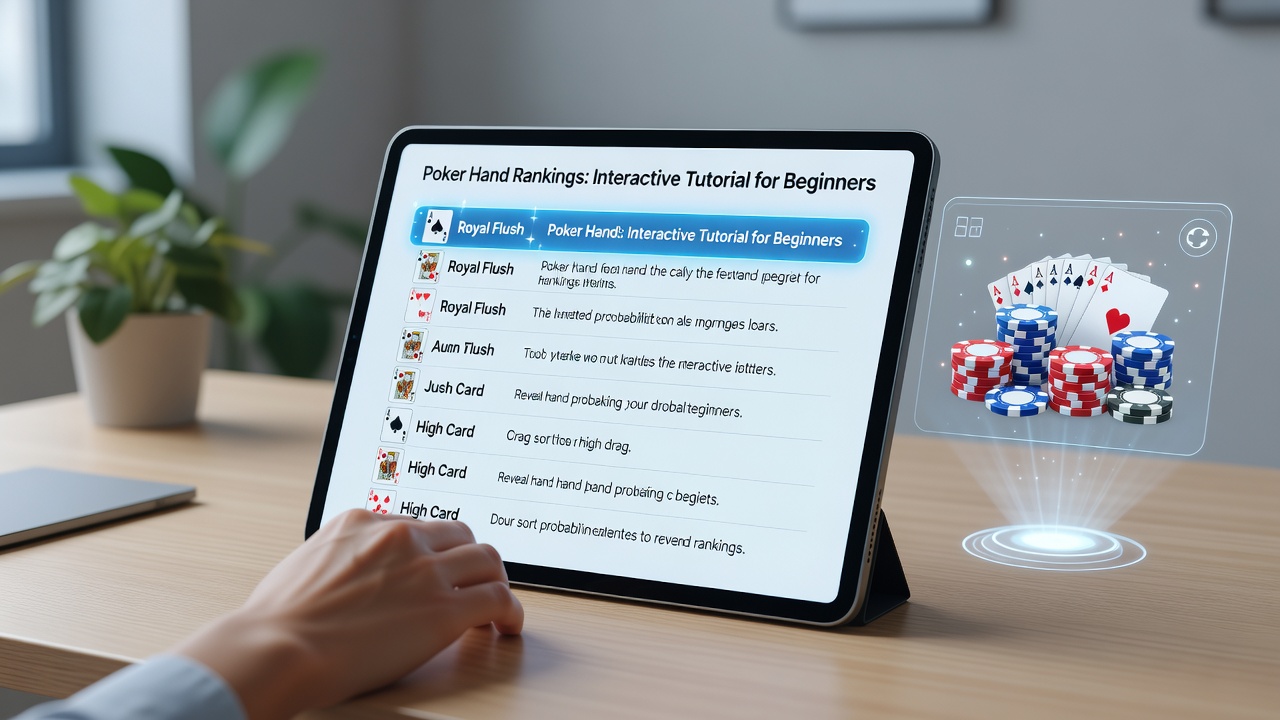
Analyzing the Integration of Poker Hand Rankings into Interactive Software Tutorials for Beginners
Developers have embedded poker hand rankings into interactive software tutorials through structured modules that present standard combinations such as royal flush, straight flush, four of a kind, full house, flush, straight, three of a kind, two pair, one pair, and high card in sequential order. These systems often use visual hierarchies and immediate feedback loops where users identify correct rankings during simulated deals, and studies from academic institutions show that such methods align with established learning models in skill acquisition.
Software platforms deliver these rankings via progressive scenarios that start with basic identification tasks before advancing to multi-step decisions involving pot odds and position, while data from educational technology reports indicate improved retention rates when tutorials combine static charts with dynamic card animations. Observers note that the approach reduces reliance on external memorization aids because the interface reinforces patterns through repetition and error correction in real time.
Core Components of Ranking Integration
Interactive elements typically include drag-and-drop exercises where beginners arrange hands by strength, click-to-reveal explanations that detail tiebreaker rules, and quiz sequences that track accuracy across multiple sessions. Research conducted by university teams in North America and Australia demonstrates that these features support spaced repetition schedules, allowing users to revisit weaker areas without restarting entire modules.
Algorithmic adjustments within the tutorials adapt difficulty based on user performance, presenting rarer hands such as straight flushes more frequently when initial accuracy falls below defined thresholds, and industry analyses from gaming associations confirm that this personalization maintains engagement levels across varied user groups. Platforms also incorporate side-by-side comparisons that illustrate how a flush beats a straight, using color-coded overlays and audio cues to highlight relative values.
Effectiveness Measured Through User Data
Performance metrics collected from tutorial deployments reveal that participants complete ranking modules in an average of 12 to 18 minutes when the software breaks content into short segments, whereas longer uninterrupted sessions correlate with lower completion rates according to aggregated platform statistics. European research institutions have documented similar patterns in digital skill training across related card game applications, noting that immediate corrective feedback reduces common errors like confusing two-pair rankings with three-of-a-kind combinations.
Case examples from software providers show that integration with practice tables allows users to apply newly learned rankings in low-stakes simulations immediately after tutorial sections, and figures from Canadian regulatory bodies tracking online gaming tools indicate measurable gains in decision speed after repeated exposure. Those who study tutorial analytics further observe that visual progress trackers motivate continued use by displaying mastery percentages for each hand category.
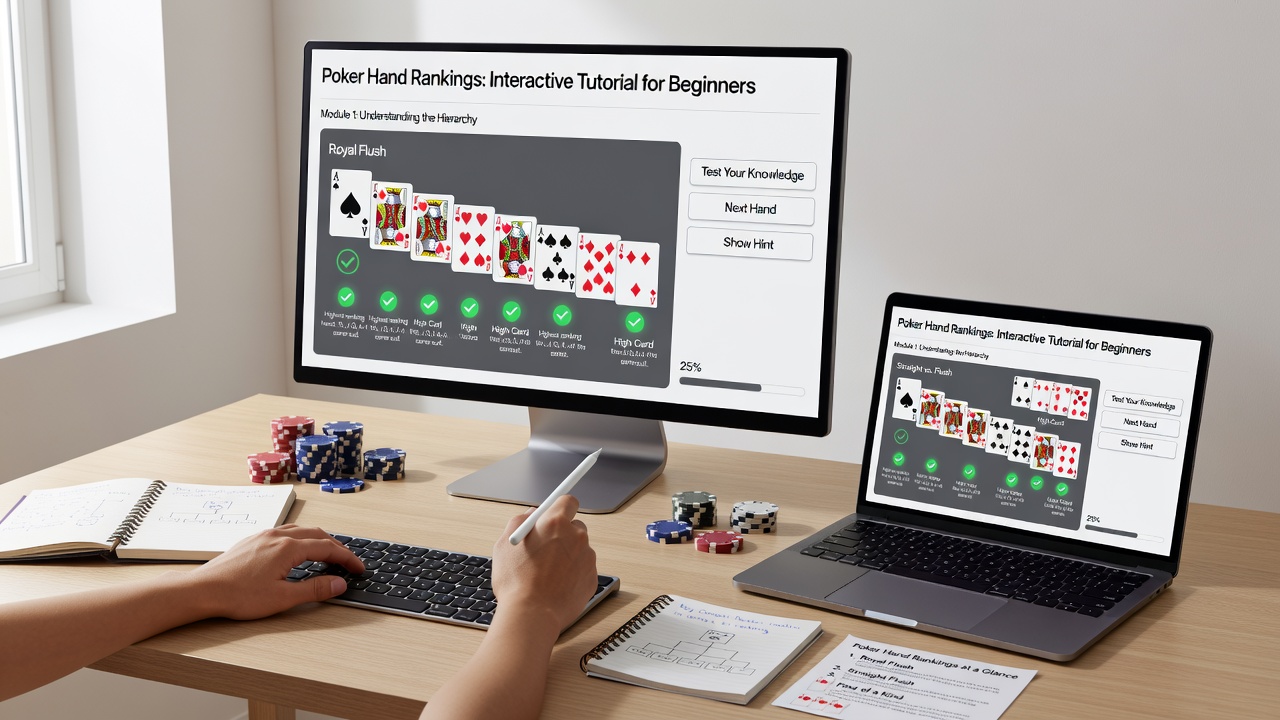
Additional layers sometimes include historical context on how rankings evolved from traditional poker variants, linking back to probability calculations that underpin each combination, and reports from Asian-Pacific gaming research groups highlight the value of multilingual support in expanding accessibility for non-English speakers. Software updates scheduled around October 2026 incorporate enhanced AR elements that project ranking hierarchies onto physical cards during hybrid training sessions, extending the reach of digital tools into mixed environments.
Technical Implementation Patterns
Developers rely on modular code structures that separate ranking databases from user interface layers, enabling rapid updates when new variants emerge or when regulatory requirements shift across jurisdictions. Database entries store hand values as integer sequences for quick comparison during simulations, while front-end scripts handle real-time rendering of card graphics and feedback messages.
Integration with external APIs allows tutorials to pull live hand examples from archived tournament data, providing authentic scenarios that mirror professional play without exposing users to financial elements, and analyses by technology research centers confirm that this method strengthens pattern recognition skills transferable to other strategic games. Security protocols ensure that stored progress data remains anonymized, aligning with privacy standards enforced by multiple international frameworks.
Challenges in Scaling for Diverse Audiences
Designers encounter variability in user prior knowledge, requiring optional bypass paths for those already familiar with basic rankings, yet the core sequence remains fixed to maintain consistency across learner cohorts. Platform logs indicate that mobile versions experience higher abandonment during complex ranking quizzes compared with desktop interfaces, prompting adjustments in touch-target sizing and simplified input methods.
Cross-platform compatibility testing continues to address differences in rendering speeds that can affect animation smoothness and user perception of hand progression, while data compiled by Australian academic groups underscores the importance of accessibility features such as screen-reader compatibility for ranking descriptions.
Conclusion
The integration of poker hand rankings into interactive software tutorials rests on established principles of structured repetition, adaptive feedback, and visual reinforcement that researchers across multiple regions have examined through performance tracking and retention studies. These systems continue to evolve with updates scheduled for late 2026 that introduce augmented elements while preserving core ranking accuracy, and the resulting tools provide measurable pathways for beginners to internalize standard hierarchies without external reference materials.